

Batteries vs. Supercapacitors? The Answer is Both.
Batteries vs Supercapacitors
Before we explain why both batteries and supercapacitors should be used in an application, let’s compare batteries and supercapacitors:
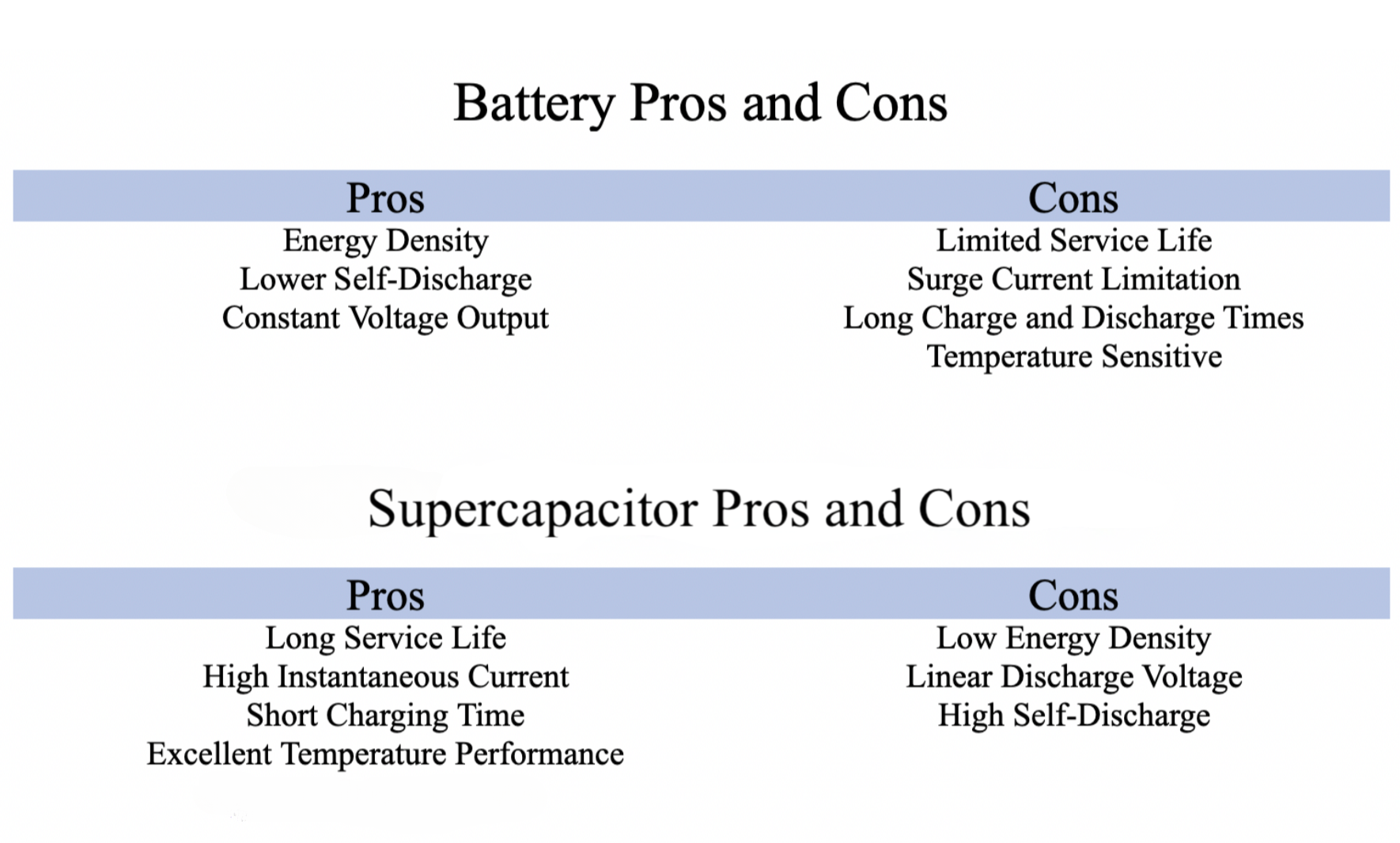
Simply put, most batteries are best in applications where the load is constant and low power while supercapacitors are best where the load is dynamic and high power.
Batteries should be used to charge and discharge slowly compared to their capacity over long periods of time. For example, a 100kWh battery will likely do best (greatest efficiency and longest operating life) in applications where it can charge over a five hour period or longer and discharges over a two hour period or longer.
This is because batteries have a weakness stemming from the way they are designed. Batteries struggle to deliver energy quickly. Delivering energy quickly, which is needed to level a load or provide the burst of current needed to turn on a motor, can waste the battery’s capacity and put stress on the battery that shortens its operating life. For this reason, batteries are said to have a low power density or a low specific power. Put another way, using a battery in applications where there is a short burst or pulse of power may be problematic.

Reference: exponent.com
Alternatively, supercapacitors are designed specifically to deliver energy very quickly, making them perfect complements to batteries. While batteries can provide ~10x more energy over much longer periods of time than a supercapacitor can (meaning they have a higher specific energy), supercapacitors can deliver energy ~10x quicker than a battery can (meaning they have a higher specific power).
Batteries and supercapacitors, working together as a team, are the ideal energy storage system for many applications in renewables, electric vehicles, and more.
The most important points to keep in mind are that batteries have a slower charge and discharge relative to supercapacitors and supercapacitors cannot discharge for nearly as long as batteries.
Why Are Supercapacitors Not More Common?
There are three main reasons why supercapacitors struggle to reach mainstream adoption, even for applications that would greatly benefit from them.
They are parts, not solutions, creating an engineering barrier to adopt them.
Space is limited. Where will they go that does not require design tradeoffs?
Like we said, they are not designed to provide long duration energy storage.
Capacitech has solved all three challenges with our C-Link product line. It is easy to use, plug and play, effective, and comes with a team of experts at Capacitech who can help you use the supercapacitors inside the C-Link modules to enhance batteries. Together, batteries and supercapacitors deliver unparalleled performance. Check it out:
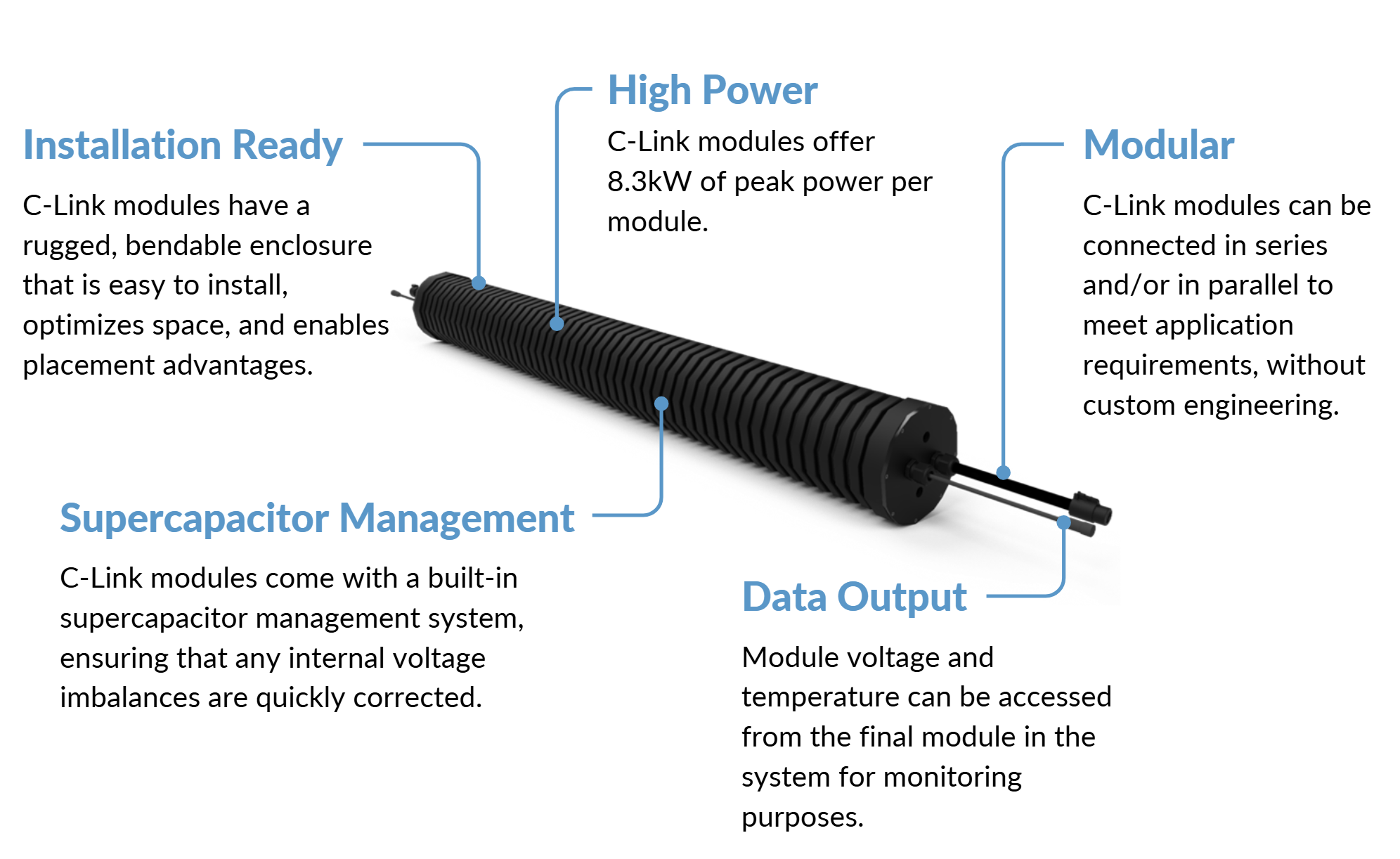
A C-Link supercapacitor module is a fully integrated supercapacitor energy storage system engineered for high-power, intermittent, and dynamic applications. Unlike traditional cabinet-based systems, the modular design mounts anywhere, including on walls, fences, and inside cable trays to add power resilience without large cabinets, concrete pads, or permit heavy construction. Our design makes installation fast, easy, and adaptable as needs evolve.
So, the Answer Might Be “Both”
There are a range of applications where supercapacitors help batteries: smoothing intermittent renewables, grid stability, electric vehicle drive trains, and AI data center microgrids to name a few. A battery is needed to provide longer duration energy storage capacity while a supercapacitor is needed to respond to rapid power fluctuations in the system.
The answer to batteries or supercapacitors is often times both. Capacitech’s team of experts can help you make the best choice. To get started, schedule a call with our founder and CEO, Joe Sleppy, by clicking the button below: