Darcy Partners invited us to present alongside FuelCell Energy and DG Matrix. Here’s what we told a room of 80+ power infrastructure decision makers.
Author: Capacitech Energy Date: May 2026 Read time: 4 min
Today’s grid and industrial facilities feature dynamic power fluctuations too fast for traditional power infrastructure.
On May 28, Capacitech CEO Joe Sleppy presented at Darcy Partners' Power Resilience Forum alongside DG Matrix and FuelCell Energy. The room held more than 80 decision makers representing utilities, independent power producers, and energy companies across North America.
When Capacitech started talking about supercapacitors at industry events a year ago, the conversation was educational because few had ever heard of them. This time, the discussion was about integration from the opening minutes.
The underlying assumption for most power infrastructure is that they will operate under steady state conditions. The challenge is that today’s loads, namely artificial intelligence data centers, are not steady state but are highly dynamic.
For example, when a cluster switches between training phases or spins up inference jobs at scale, it creates power surges reaching 50% above nominal load at the rack level. Those surges last anywhere from 200 milliseconds to 2 seconds and repeat thousands of times per day. Nobody sized upstream infrastructure with that envelope in mind because, until recently, the loads on the other side of the transformer were nowhere near this volatile.
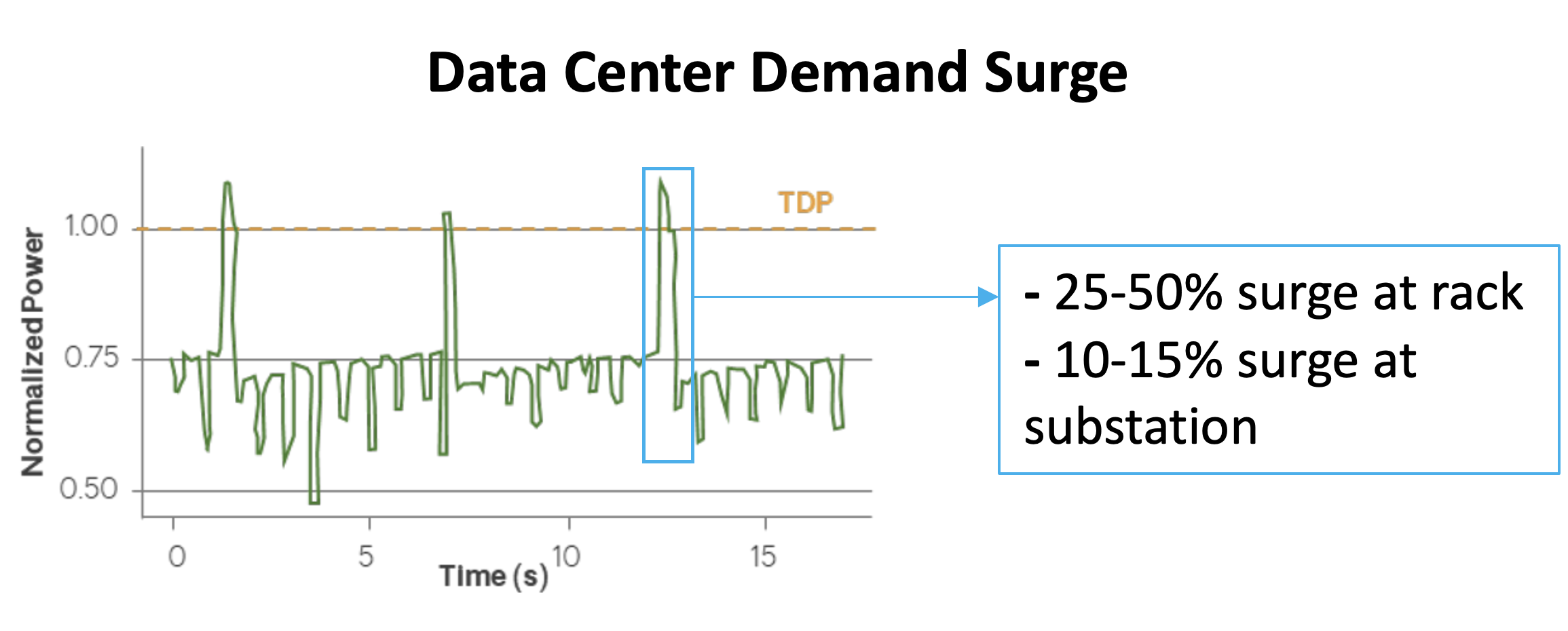
Data center demand surge: 25-50% at rack level, 10-15% at substation
The C-Link supercapacitor system exists to handle the fast transients to complement BESS, UPS, and onsite generation. The system is durable, responding hundreds of thousands of times without degradation, and relies on electrostatic energy storage mechanisms instead of more dangerous lithium-ion chemistry. Because the modules mount on walls and cable trays, the footprint cost is essentially non-existent. To be clear, C-Link modules do not replace the UPS, the generator bank, or the battery string in a facility's architecture. What the system does is absorb the sub-second surges those assets were never engineered to manage, helping them last longer and perform closer to their rated specs.
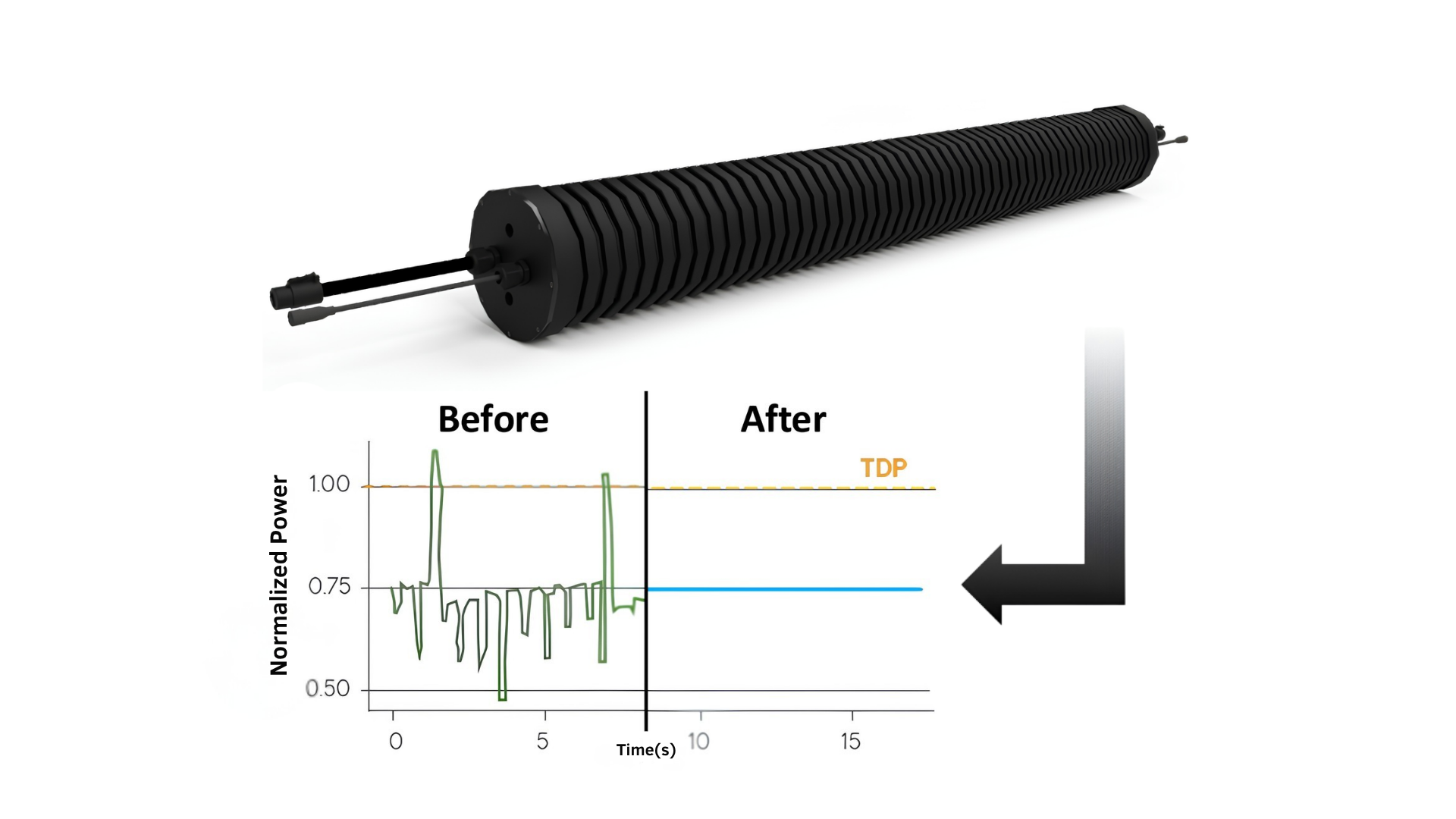
C-Link product and before/after power smoothing
Two points got the strongest audience response.
The retrofit problem is an installation problem. Existing colocation facilities taking on new high-density compute loads for the first time have no room to expand their electrical infrastructure. C-Link modules go into the wall space and cable trays already inside those electrical rooms, and most installs wrap up in days with no construction permits or cranes involved.
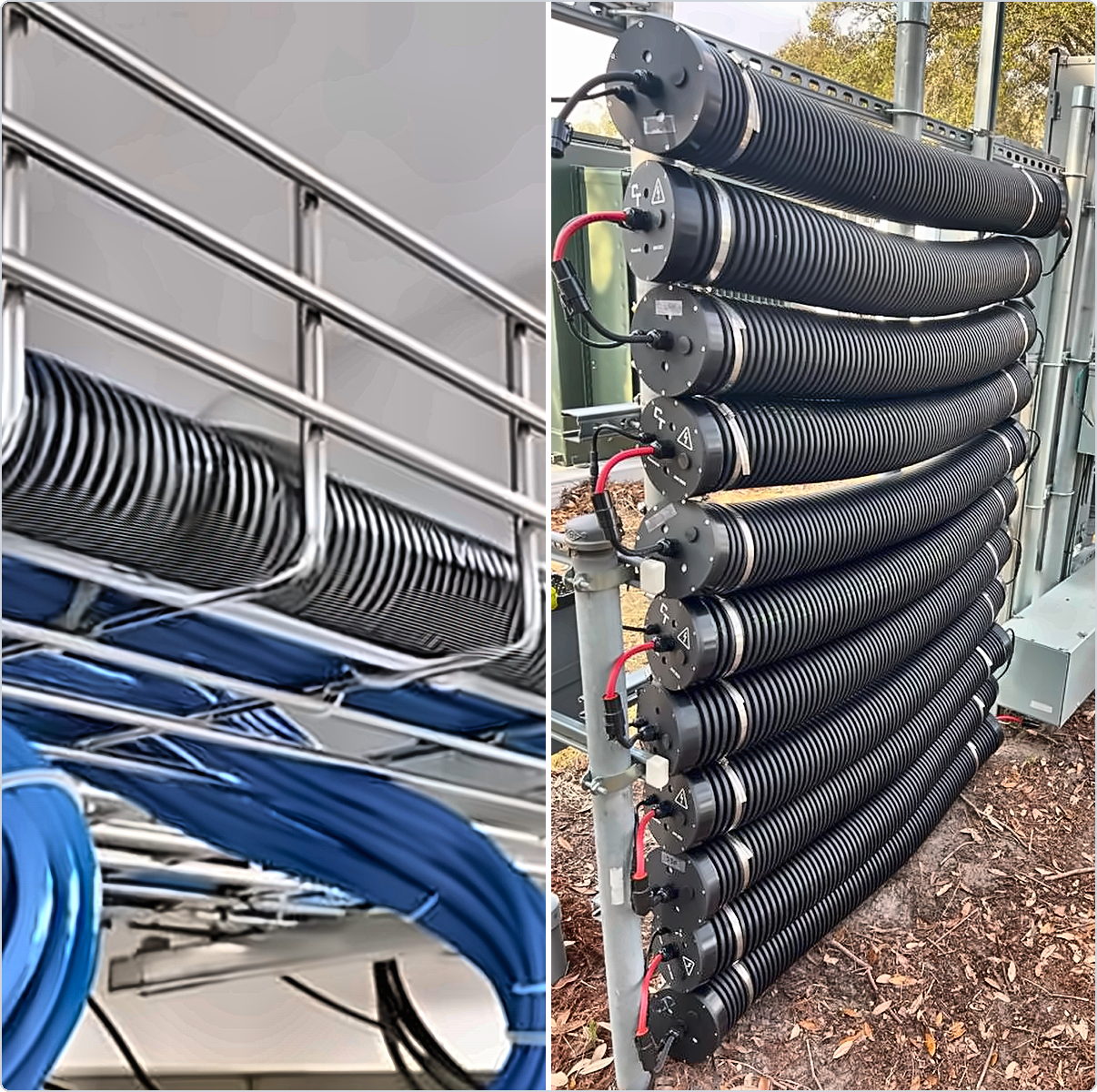
C-Link installation in cable trays and wall mounts
Further, when BBUs and sidecars are removed from IT racks, operators open up to space to increase compute capacity in the same physical footprint, which increases data center revenue. The generation side economics look different in scale but still compelling. Operators reduce CapEx and stress on power infrastructure to prolong service life.
What DG Matrix and FuelCell Energy showed about the rest of the power chain
The strongest takeaway from the forum was that no single technology solves the power problem for compute-dense data centers. Generation at the site, intelligent routing between sources and loads, and conditioning at the millisecond level each address a different layer of the stack.
DG Matrix showed their Interport solid state transformer, which routes power between sources and loads with software-defined control at up to 98% efficiency. A traditional transformer is a fixed asset: once it is wired, the topology is set. The Interport makes power routing reconfigurable without rewiring, which means operators adapt to shifting loads and new generation sources on the fly. We are exploring joint testing and go-to-market work with DG Matrix because the C-Link system and the Interport sit at different points in the same power chain, and the integration surface is worth proving out.
FuelCell Energy made the case for generation that operates independently of grid constraints and is always running. When the utility interconnection timeline for a new site stretches 3 to 5 years out, fuel cells bridge the wait.
The room stopped asking what supercapacitors are
A year ago we would have spent half the session explaining what a supercapacitor is and why it matters. At this forum, every question assumed the technology works and focused on logistics: how fast the install goes, what the electrical room requirements look like, and whether the data from one room is enough to build an internal business case.
For operators planning around new high-density compute loads in existing facilities, a single electrical room pilot with C-Link modules on existing cable trays and wall mounts wraps up in a matter of days at a fraction of the cost of an infrastructure expansion. The transient reduction and capacity recovery data from one room gives operators enough evidence to build the business case for broader deployment across the facility.
Visit capacitechenergy.com/data-centers or reach out to our team to scope a pilot.
