

Power Resilience: Lessons from Our Utility Microgrid Project with Sandia National Laboratories
Author: Capacitech Energy Date: June 2026 Read time: 4 minutes
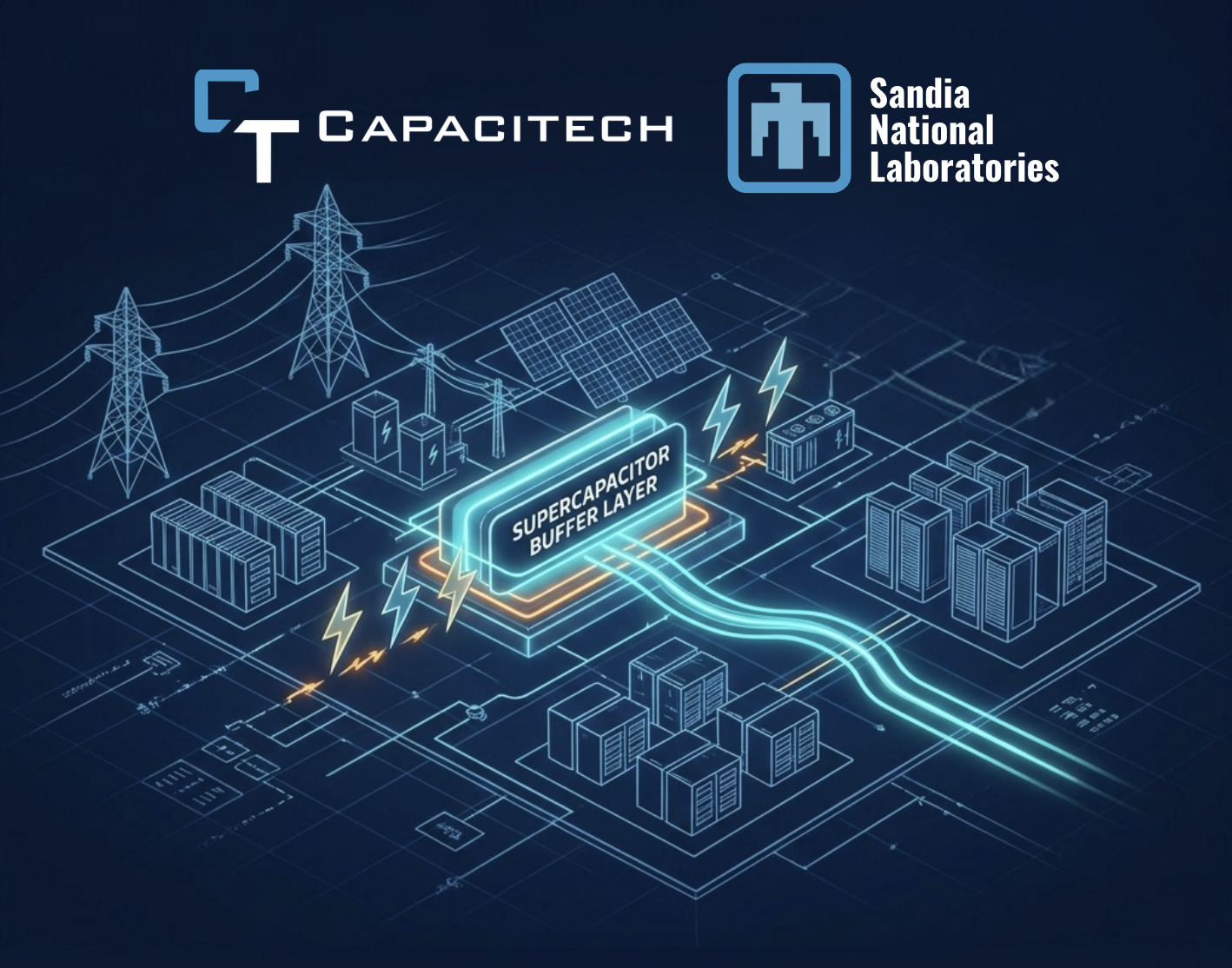
Modern power infrastructure is entering a period of unprecedented complexity.
The rapid growth of dynamic loads—such as AI data centers—combined with the integration of intermittent renewable energy sources, has introduced severe millisecond-scale volatility to the grid. Traditional power protection assets, designed for steady-state environments and hour-long outages, are increasingly forced to manage cycle-level transients they were never engineered for.
To address this gap, Capacitech collaborated with Sandia National Laboratories on a utility microgrid demonstration project evaluating our 480 Vac-coupled C-Link Supercapacitor System.
The resulting technical validation report, published via the U.S. Department of Energy (available here), provides field data proving the viability of the C-Link solution for power conditioning applications. The demonstration project shows that supercapacitor energy storage systems can enable new methods of operations while enhancing power quality and resilience to reduce operational risk across modern power infrastructure—especially for utilities, data centers, and other mission-critical facilities.
Here are the key operational successes and architectural takeaways validated by the project data:
1. Managing High Inrush Currents
During black-start operations and heavy inductive load steps, systems experience massive instantaneous current draw. The Sandia field tests successfully demonstrated how C-Link modules respond to inject power into the system. In doing this, the supercapacitor layer prevents grid voltage from collapsing, effectively mitigating the risk of nuisance trips, protective logic locks, and unexpected system downtime for onsite power generation systems, microgrids, and industrial facilities.
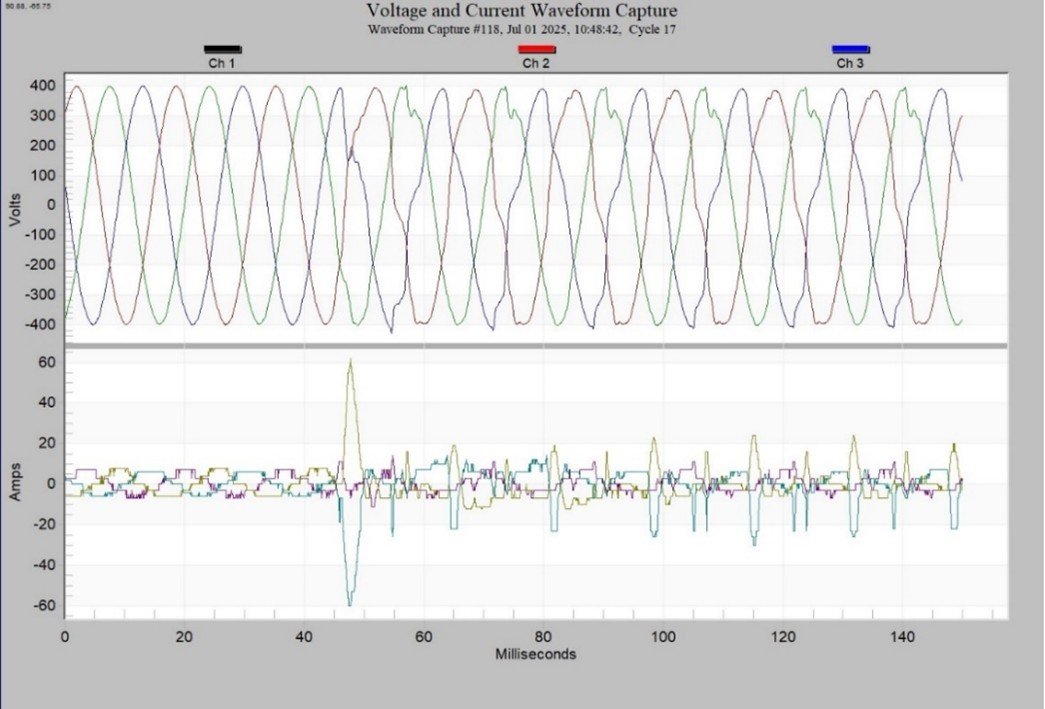
Voltage and current waveforms from a successful re-energization of a transformer.
2. Preventing Equipment Damage and Extending Asset Lifespan
When intermittent generation assets experience sudden shifts—such as a solar array undergoing a rapid passing-cloud event—the resulting voltage and frequency fluctuations destabilize local distribution networks.
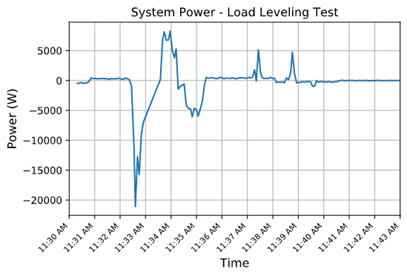
Power Quality Regulation: The C-Link system dynamically regulates voltage and frequency to smooth out these fluctuations at the cycle level.
Relieving Traditional Assets: By handling fast-acting, high-frequency transients, the supercapacitor layer shields upstream transformers and battery energy storage systems (BESS) from the power fluctuation event, reducing the burden placed upon them, and directly extending their operational lifespan.
3. Enabling More Efficient System Designs and Simplified Operations
The Sandia demonstration confirmed that pairing rapid response assets like the C-Link with steady state assets, simplifies microgrid control logic. With Capacitech handling sub-second stability autonomously in the background, the primary generation and storage assets can operate exactly as intended: in a stable, steady state. In the event of a change, control loops have seconds to send a new command and ramp up (or down) the resource involved.
4. Delivering Cost-Effective Resilience with Lower Lifetime OpEx
Batteries and supercapacitors are optimized for different jobs in a power system. Economically speaking - batteries feature a lower $/kWh while supercapacitors feature a better $/kW. A complete energy storage system for many modern applications should feature both, not only for the technical advantages, but also to optimize capital efficiency on both the $/kW and $/kWh basis.
Deploying lithium-ion batteries for high-frequency, shallow-cycling duty is capital inefficient and accelerates cell degradation. Supercapacitors store energy electrostatically, allowing them to complete over 1,000,000 charge/discharge cycles without the degradation concerns typical of frequent battery cycling. This durability provides a dedicated, low-maintenance resilience layer that lowers lifetime operating costs (OpEx) compared to a battery-only approach.
The Engineering Path Forward
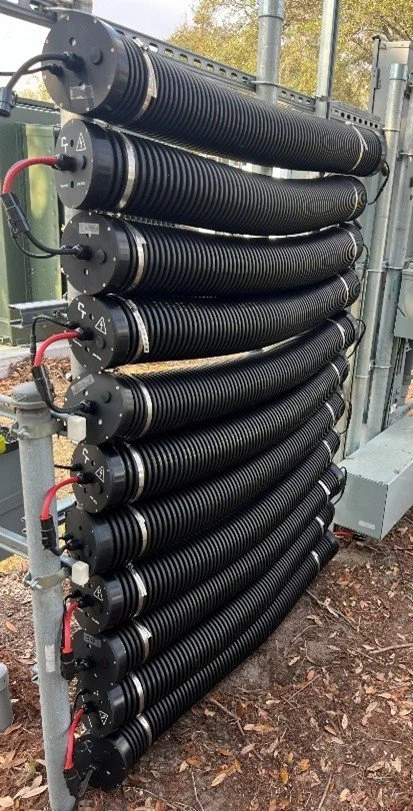
The data validated by Sandia National Laboratories underscores a fundamental reality of modern infrastructure design: true resilience requires a layered architecture. We must utilize batteries to shift energy demand, and supercapacitors as the high-speed shock absorber for transients.
By choosing a modular, space-saving form factor like the C-Link, facilities can easily retrofit this protective layer directly into existing electrical pathways—such as walls, fences, or cable trays—without major civil engineering efforts or construction.
Ready to evaluate the transient profile of your facility? Every engagement starts with understanding your specific load constraints to configure a system matched to your exact needs.