

Why High-Speed Balancing is Critical for Data Centers
The AI Power Dilemma
The artificial intelligence boom is placing unprecedented strain on modern power grids. Unlike legacy compute workloads, AI models generate aggressive, sudden bursts of power demand. The moment a Large Language Model (LLM) query is received—such as when a user asks an AI to analyze data or generate text—power requirements spike for 0.2-2 seconds, creating millisecond-to-second scale transient power fluctuations. These severe transients reduce power quality and accelerate the degradation of hardware assets across the entire data center power stack.
To combat this, data center operators have turned to supercapacitors. Acting as electrical "shock absorbers," supercapacitors excel at smoothing AI load profiles that are rapid and cyclical, complementing existing generation, distribution, and battery energy storage assets.
The Supercapacitor Solution and Its Bottleneck
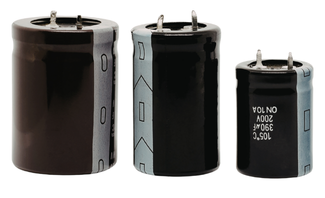
To achieve the high voltages required by modern data center architectures, hundreds or thousands of individual supercapacitor cells must be connected in series. However, deploying them at scale introduces a major engineering obstacle: component-level variations. The same problem exists for battery energy storage systems, which is why battery management systems (BMS) are utilized. Supercapacitors require an equivalent system.
Due to manufacturing tolerances, cells possess intrinsic differences in leakage current, equivalent series resistance (ESR), and capacitance, with capacitance tolerances typically ranging from -10% to +20%. Because capacitance directly impacts the rate at which voltage changes, these variances inherently cause cell-to-cell voltage imbalances during rapid cycling. Left unmitigated, these imbalances trigger a compounding feedback loop that places disproportionate electrical and thermal stress on the weakest cells, leading to overcharging, rapid degradation, and an increased risk of cell rupture or venting.
Why Traditional Balancing Fails the AI Test
To see why legacy infrastructure struggles with AI power spikes, let’s break down the three traditional balancing strategies and examine exactly why they fall short under intense AI workloads.
Passive Balancing: Existing systems use fixed resistors placed in parallel with each cell to gradually dissipate excess energy. While simple and low-cost, they operate at low milliamp-level currents (<1W), too slow to keep pace with AI cycles that repeat every few seconds.
Standard Active Balancing: Systems using operational amplifiers or standard MOSFET-based switching architectures are designed to correct slow, leakage-driven imbalances. Operating at low-current (mA) levels, Op-Amp and MOSFET systems lack the current capacity and speeds needed to correct voltage imbalances in transient-heavy workloads.
System Oversizing: To compensate for slow balancing speeds, systems are oversized, utilizing added cells in series to create a safety voltage cushion, or added rows in parallel to slow down the growth of imbalances. This directly undermines capital efficiency (CapEx), footprint optimization, and ultimately data center revenue by taking up valuable real estate that could otherwise house compute capacity.
Enter High-Speed Balancing: The Capacitech Advantage
For a supercapacitor system to reliably support AI load profiles, the balancing mechanism must address the imbalance before the next workload pulse arrives. Traditional milliamp-level balancing architectures simply cannot keep up.
Capacitech's proprietary high-speed balancing topology featured in their C-Link™ product line rewrites this framework. Rather than acting reactively after imbalances compound, Capacitech's intelligent, modularly scalable system continuously monitors cell voltages and applies ultra-fast corrective actions via high-power active topologies.
Performance Comparison: Time to Correct a 0.014V Imbalance

Capacitech Topology: Less than 1 second
Conventional Op-Amp: More than 13 seconds
Conventional MOSFET: More than 33 seconds
Passive Resistor: More than 59 seconds
By operating at amp-level balancing rates instead of milliamp-level currents, Capacitech delivers a >20x faster voltage correction speed. It effectively flattens the voltage divergence curve over extended operational windows, ensuring individual cells never drift toward hazardous overvoltage limits.
The Bottom Line for Data Center Operators
In mission-critical AI data centers, power infrastructure directly correlates to uptime, hardware safety, and profitability. Moving from reactive, lagging legacy systems to a high-speed stabilization framework yields significant business advantages:
Lower CapEx: Eliminating the need for extreme system oversizing ensures every dollar invested goes toward maximizing compute density and driving capital efficiency.
Longer Asset Lifespan: Clamping voltage imbalances early prevents severe thermal and electrical degradation penalties, directly extending equipment service life.
Reduced TCO and Downtime: Tighter voltage alignment minimizes the risk of component failures, cell venting, or unexpected maintenance cycles, safeguarding operational continuity.
As data centers evolve into high-density AI factories, legacy power infrastructure simply cannot keep pace. In this new landscape, high-speed supercapacitor balancing is an absolute operational necessity.

For further information, please contact:
Joe Sleppy
CEO
joe.sleppy@capacitechenergy.com
