

Why the Open Compute Project Demands C-Link Supercapacitor Systems in the Cable Tray
Author: Salaheddine Bouabid Date: June 2026 Read time: 4 minutes
The Open Compute Project (OCP) shifted hyperscale power architecture by transitioning from traditional centralized UPS topologies to a decentralized, rack-centric approach. Instead of relying on a facility-wide backup system, modern designs protect the white space by embedding the UPS function directly inside individual IT racks using Battery Backup Units (BBUs). While this design reduces double-conversion losses and reclaims valuable facility footprint, it introduces complex new challenges regarding rack-space constraints and power compliance at the row level.
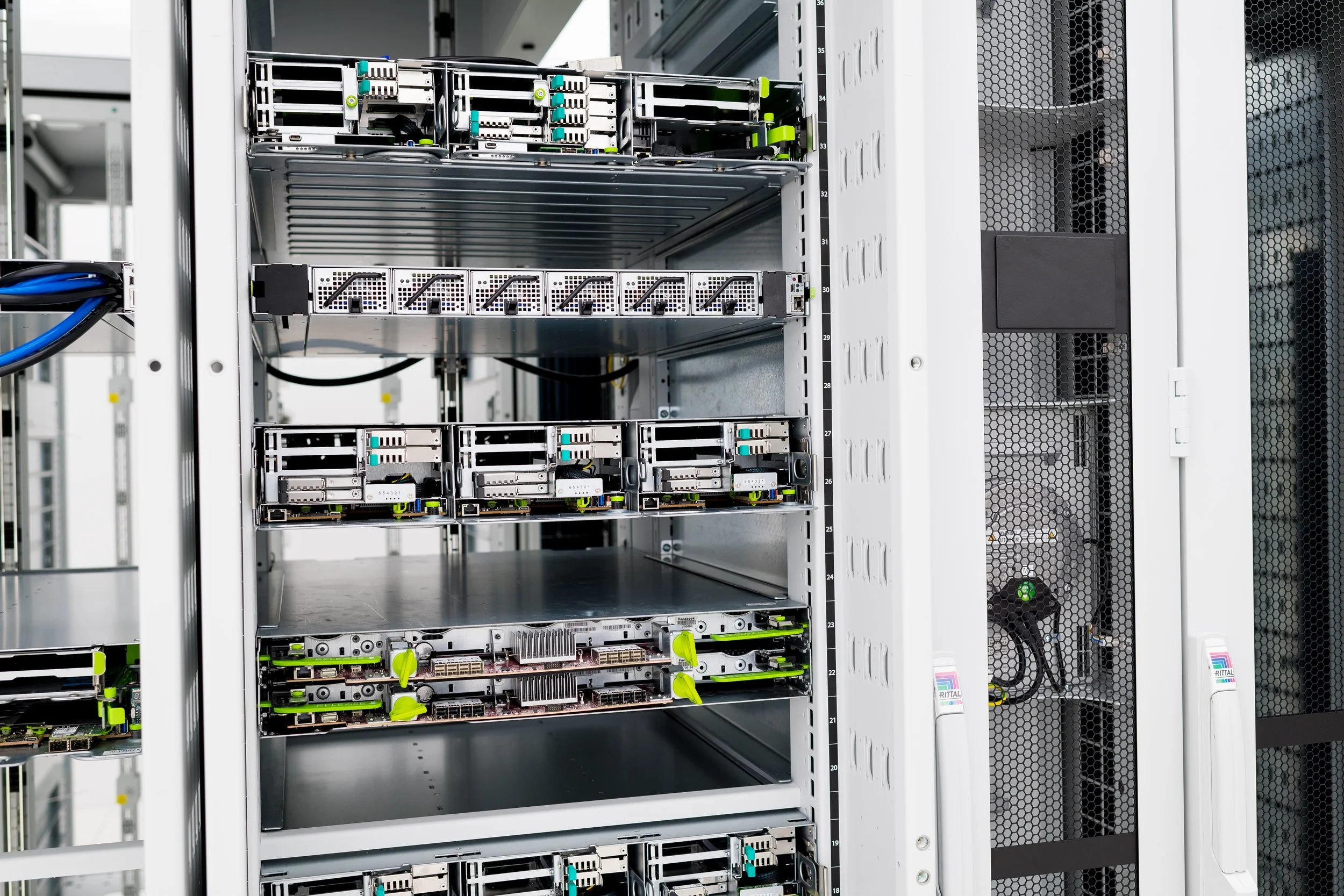
The Architectural Trade-Off: Covering White Space via In-Rack BBUs
For decades, data center design relied on a massive security blanket: a centralized, facility-scale Uninterruptible Power Supply (UPS) housed in a dedicated battery room. This asset acted as a master electrical dampener, isolating the entire white space from utility grid fluctuations and ensuring strict grid compliance before current ever reached a server rack.
To maximize efficiency and eliminate multi-stage conversion losses, the Open Compute Project (OCP) pioneered a radical transformation led by hyperscale data center operators like Google and Microsoft. By bypassing the centralized facility UPS, modern topologies disperse backup energy, deploying integrated Battery Backup Units (BBUs) directly within localized rack power shelves.
While this approach successfully optimizes efficiency and reclaims square footage at the facility level, it places the entire burden of power conditioning directly on the individual server rows. This structural reorientation has forced hyperscale engineers into a critical bottleneck.
The Dual Crisis: Stripped Compliance and Run-Out Rack Space
By replacing the facility-scale centralized UPS with distributed, in-rack Battery Backup Units (BBUs) to cover the white space, OCP architectures achieve remarkable efficiency gains. However, this design shifts the entire burden of power quality and utility grid compliance directly onto the individual rack. Without a centralized UPS acting as a master electrical filter between the IT equipment and the utility grid, sensitive server components interact more directly with the raw power feed. This requires robust transient buffering to handle the severe, microsecond current transients characteristic of modern AI workloads and to satisfy strict regulatory compliance standards.
The standard engineering response would be to integrate localized power conditioning assets, like supercapacitors, directly alongside the in-rack BBU. However, physical rack space is already at a premium. Current high-density configurations are packed with power shelves, liquid cooling manifolds, extensive plumbing, and dense processing nodes [1]. This internal space crunch will only intensify as the industry transitions toward next-generation infrastructure, where higher-voltage DC rack distribution architectures are increasingly seen as a likely path forward. With the chassis already filled, surrendering precious horizontal Rack Units (RU) to internal, box-shaped transient filters means directly sacrificing revenue-generating compute capacity.
Traditionally, the centralized facility UPS functioned as the primary gatekeeper for grid compliance, mitigating harmonic distortion and absorbing voltage fluctuations between the utility grid and the white space. Without this buffer, individual rack rows must now manage these strict regulatory and power-conditioning demands on their own.
This creates a distinct architectural challenge. Engineers must restore the compliance filtering lost when abandoning the centralized UPS, but they have minimal physical room inside the rack to house it. Deploying Capacitech's C-Link supercapacitor modules within the overhead cable trays addresses both issues simultaneously. By offloading transient mitigation into the underutilized space of the cable tray and interfacing via modular power converters, the system provides the vital electrical cushioning needed for compliance and uptime, all while leaving internal rack footprints open for high-density compute nodes.
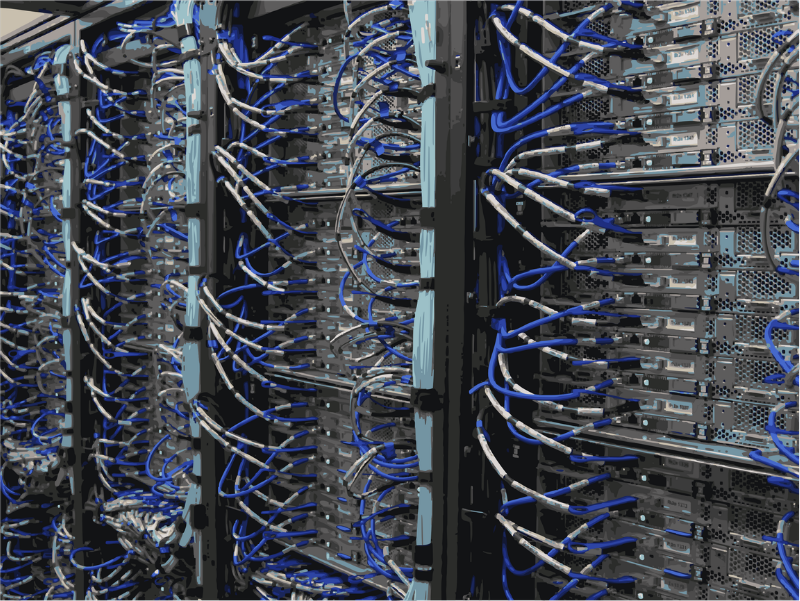
The Cable Tray Fix: Resolving Space and Compliance Simultaneously
Capacitech designed the C-Link supercapacitor module to eliminate this trade-off entirely by moving the entire protection layer outside the rack. Leveraging a unique, conduit form factor, C-Link modules are engineered to be routed entirely within the underutilized overhead cable trays that traverse the data center white space.
By taking advantage of modern power converter interfaces, C-Link modules do not require a direct, unmanaged link to the rack bus voltage. Because advanced power converters are available to bridge virtually any AC or DC voltage threshold and seamlessly step power up or down, a cable-tray-mounted C-Link array benefits from exceptional application flexibility. This allows the system to support the 415Vac, 480Vac, 400Vdc, and 800Vdc distribution topologies that are increasingly gaining traction as a potential design direction for the industry.
This cable tray architecture instantly addresses both sides of the OCP infrastructure crisis:
Reclaims Premium Compute Space: By packing the high-power supercapacitors into overhead cable trays instead of an internal server slot, engineers reclaim more space per rack. This space can be filled immediately with high-density GPU nodes, directly expanding cluster processing capacity without expanding the physical facility footprint to increase data center revenue
Restores Grid and Uptime Compliance: When an AI training workload triggers instantaneous load steps, the C-Link modules respond within microseconds through its power converter. By discharging electrostatic energy to damp the sudden current surge, it clamps voltage sags, stabilizes the distribution track, and insulates the local Lithium-ion BBU cells from frequent, degrading micro-cycling, increasing battery system lifespan.
Fulfilling the Intent of OCP
The core philosophy of the Open Compute Project is radical optimization and the systematic elimination of infrastructure waste. Relying on antiquated, box-bound power quality hardware that chokes off computing potential directly violates that mission.
By utilizing highly adaptable power conversion and deploying within the space of overhead cable trays, Capacitech's C-Link supercapacitor modules deliver the essential electrical cushioning of a legacy centralized UPS while fully honoring the decentralized, efficient reality of modern in-rack BBUs. It ensures that high voltage data centers remain fully compliant, perfectly protected against AI transients, and entirely focused on computing.
References
I. Latif et al., "Advancing Sustainability in Data Centers: Evaluation of Hybrid Air/Liquid Cooling Schemes for IT Payload Using Sea Water," in IEEE Transactions on Cloud Computing, vol. 13, no. 1, pp. 184-197, Jan.-March 2025, doi: 10.1109/TCC.2024.3521666.
